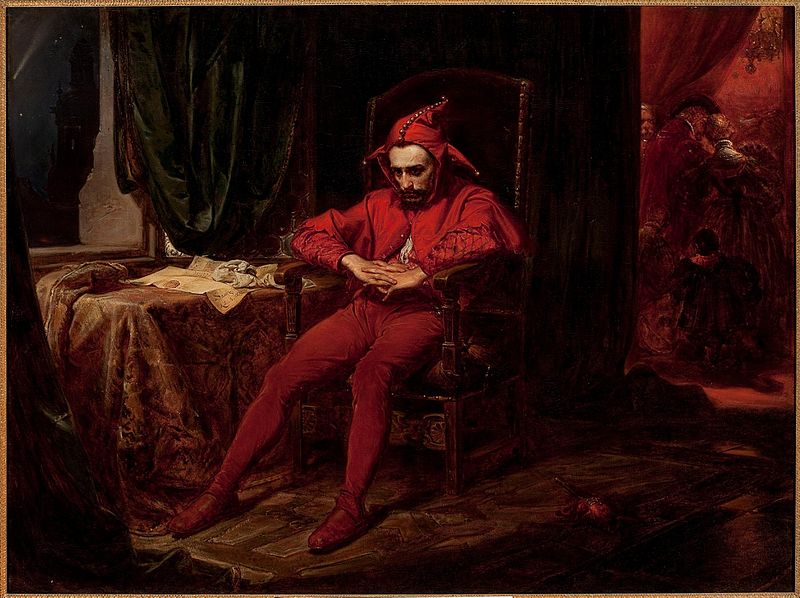
"Jan Matejko, Stańczyk" by Jan Matejko - http://cyfrowe.mnw.art.pl/dmuseion/docmetadata?id=4795. Licensed under Public Domain via Commons - https://commons.wikimedia.org/wiki/File:Jan_Matejko,_Sta%C5%84czyk.jpg#/media/File:Jan_Matejko,_Sta%C5%84czyk.jpg
Many think the social status of a jester was that of a traveling vagabond. In most cases, this was far from the truth.
There were traveling jugglers, story tellers, and basic jesters. Think of them as the medieval version of “carnival workers”. Cast aside by the norm, these were the thieving, mentally irregular, avoidable sorts of people.
These, as stated, were not uniform in the world of jesters. Almost every noble employed a jester for his/her own entertainment throughout the medieval ages, with many having knowledge that no one else may have had; an extreme confidant of the utmost secrets.
There were also those that were mentally disabled in some capacity. These jesters are not noted as well in the courts as others were, as most jesters had to be very quick of wit. However, there are findings of people thought to have been “touched by God” that would babble on about random things like an insane person might, and people would laugh and listen to them tell stories from their “warped point of view”. These mentally disabled people were called “fools” and in most cases were not much more than a beggar sitting on the sides of the roads with a pan or bucket in front of them to catch the few coins that were thrown their way.
These men were masters in their respected skill of choice; mixing the skill into the general mockery or merry making.
King James VI of Scotland employed his jester, George Buchanan during his rule in the mid 1500’s. King James VI was notoriously lazy about just signing official papers before reading them. This became a serious problem in the kingdom. George (1506-1582) went to James VI and tricked him into abdicating the entire rule of Scotland to himself for 15 days. King James VI began reading the documents before signing them from then on.
Who else could have had that sort of impact on a King? Surely any other servant in the court could not have openly pointed out the Kings shortcomings in such a brazen fashion without severe punishment.
One such example was in 1340 when French King Phillippe VI’s entire naval fleet had been destroyed by the English in The Battle of Sluys. No one else dared to tell Phillippe VI this news save his jester, who told his King that the English sailors “don’t even have the guts to jump in the water like our brave French”.
However, even after being disgraced to the point of being threatened to be hung, Archibald gained favor in King Charles and was granted a large acreage of land in Ireland. Even after, books telling of his jokes were circulated in London.
This was rare, however. Rumors state that some nobles went so far as to reprimand their jesters for not being lewd enough in their picking out the nobles flaws.
Jeffery Hudson, at the age of seven, was presented to the Duchess of Buckingham as a “rarity of nature”. Jeffery was a dwarf, but very unique dwarf due to his perfect proportions. Thought to have been only around 19 inches tall, he was very small indeed. Dwarfs and little people were not uncommon in medieval Europe, though none were reported to have been proportioned as Jeffery was.
After joining the Duchess of Buckingham’s house, they soon entertained King Charles and his French wife, Queen Henrietta Maria. The Queen became enamored with Jeffery from his elaborate entrance. The Duke and Duchess presented the Queen with a very large pie, from which Jeffery popped out of. So amused the Queen was, the Duke and Duchess offered Jeffery to her as an amusing gift.
Raised from the age of seven with Queen Henrietta in her court, the French Queen raised him Roman Catholic like she was. The Queen was French, and Roman Catholic, two things that were the cause of some tension in London.
Jeffery even traveled with the Queen several times. Once at the age of ten he traveled with the Queen to France. It was under the guise of procuring a midwife, but it was more likely to give Jeffery an appreciation of French courts.
On the way back across the Channel, their ship was overtaken by Dunkirk Pirates who plundered the ship. Eventually they were released back to London.
Jeffery grew higher and higher in the ranks of the Queens court. Very witty and intelligent, Jeffery learned to ride a horse and shoot pistols very well. Through all of it, Jeffery knew that if it were not for his size and proportionality, he would not have had the opportunity to be in the court.
The fact that King Charles was married to a French Roman Catholic lead into the Parliament and the Royalist starting an armed civil war of sorts. The Queen gave Jeffery the title of “Captain of Horse”. This was no jesters joke.
While Jeffery knew that his size got him into the courts, Jeffery decided that he would no longer play the part of a jester. He had raised himself up to the point of Captain Jeffery Hudson, and would no longer hear of any insults or jests made his way. The Queens Master of Horse, William Crofts had a brother that learned this the hard way. It was never written what the insult was, but Crofts offended Jeffery. Jeffery in turn challenged Crofts to a duel, on horseback, with pistols. Crofts was shot in dead through his head by the little Jeffery Hudson. Problem was that Dueling had been outlawed for many years in France. The Queen asked the French that she administer the punishment and had no other choice but to expel him from her court.
The rest of Jeffery Hudson’s life is highly disputed and rumored. One such rumor was that he was again captured by pirates and forced into slave labor in North Africa for years before returning perhaps 25 years later. It was rumored that he grew 45 inches in those years; doubling his height. These stories are not confirmed. There are sketchy records of Jeffery returning to London to be sent to prison for being a Roman Catholic where he died at an unknown time, from an unknown cause, and buried at an unknown location.
“Thou speak'st aright;
I am that merry wanderer of the night.
I jest to Oberon and make him smile
When I a fat and bean-fed horse beguile,
Neighing in likeness of a filly foal:
And sometime lurk I in a gossip's bowl,
In very likeness of a roasted crab,
And when she drinks, against her lips I bob
And on her wither'd dewlap pour the ale.
The wisest aunt, telling the saddest tale,
Sometime for three-foot stool mistaketh me;
Then slip I from her bum, down topples she,
And 'tailor' cries, and falls into a cough;
And then the whole quire hold their hips and laugh,
And waxen in their mirth and neeze and swear
A merrier hour was never wasted there.
(Act ii., Scene i.)”
But this is not the only reference of a “fool” or jester in Shakespeare’s works. There are approximately 22 identifiable “fools” in Shakespearean plays, though many are never clearly identified as jesters.
This fact points to the importance a jester had on the times and times earlier than Shakespeare; otherwise he would not have thought to create the characters in his plays.
In closing, do not think of a jester as a dimwitted fool, as you would not be correct. Jesters played a major role in the shaping of the medieval and early renaissance era. The traveling gypsies were there, but not the true meaning of the word jester.
Sources
There were traveling jugglers, story tellers, and basic jesters. Think of them as the medieval version of “carnival workers”. Cast aside by the norm, these were the thieving, mentally irregular, avoidable sorts of people.
These, as stated, were not uniform in the world of jesters. Almost every noble employed a jester for his/her own entertainment throughout the medieval ages, with many having knowledge that no one else may have had; an extreme confidant of the utmost secrets.
- Deformities and Metal disabilities
There were also those that were mentally disabled in some capacity. These jesters are not noted as well in the courts as others were, as most jesters had to be very quick of wit. However, there are findings of people thought to have been “touched by God” that would babble on about random things like an insane person might, and people would laugh and listen to them tell stories from their “warped point of view”. These mentally disabled people were called “fools” and in most cases were not much more than a beggar sitting on the sides of the roads with a pan or bucket in front of them to catch the few coins that were thrown their way.
- A man of many skills
These men were masters in their respected skill of choice; mixing the skill into the general mockery or merry making.
- A man who could mock a King and Queen
King James VI of Scotland employed his jester, George Buchanan during his rule in the mid 1500’s. King James VI was notoriously lazy about just signing official papers before reading them. This became a serious problem in the kingdom. George (1506-1582) went to James VI and tricked him into abdicating the entire rule of Scotland to himself for 15 days. King James VI began reading the documents before signing them from then on.
Who else could have had that sort of impact on a King? Surely any other servant in the court could not have openly pointed out the Kings shortcomings in such a brazen fashion without severe punishment.
- Deliverance of bad news
One such example was in 1340 when French King Phillippe VI’s entire naval fleet had been destroyed by the English in The Battle of Sluys. No one else dared to tell Phillippe VI this news save his jester, who told his King that the English sailors “don’t even have the guts to jump in the water like our brave French”.
- Disgrace of a jester
However, even after being disgraced to the point of being threatened to be hung, Archibald gained favor in King Charles and was granted a large acreage of land in Ireland. Even after, books telling of his jokes were circulated in London.
This was rare, however. Rumors state that some nobles went so far as to reprimand their jesters for not being lewd enough in their picking out the nobles flaws.
- Royal Dwarf
Jeffery Hudson, at the age of seven, was presented to the Duchess of Buckingham as a “rarity of nature”. Jeffery was a dwarf, but very unique dwarf due to his perfect proportions. Thought to have been only around 19 inches tall, he was very small indeed. Dwarfs and little people were not uncommon in medieval Europe, though none were reported to have been proportioned as Jeffery was.
After joining the Duchess of Buckingham’s house, they soon entertained King Charles and his French wife, Queen Henrietta Maria. The Queen became enamored with Jeffery from his elaborate entrance. The Duke and Duchess presented the Queen with a very large pie, from which Jeffery popped out of. So amused the Queen was, the Duke and Duchess offered Jeffery to her as an amusing gift.
Raised from the age of seven with Queen Henrietta in her court, the French Queen raised him Roman Catholic like she was. The Queen was French, and Roman Catholic, two things that were the cause of some tension in London.
Jeffery even traveled with the Queen several times. Once at the age of ten he traveled with the Queen to France. It was under the guise of procuring a midwife, but it was more likely to give Jeffery an appreciation of French courts.
On the way back across the Channel, their ship was overtaken by Dunkirk Pirates who plundered the ship. Eventually they were released back to London.
Jeffery grew higher and higher in the ranks of the Queens court. Very witty and intelligent, Jeffery learned to ride a horse and shoot pistols very well. Through all of it, Jeffery knew that if it were not for his size and proportionality, he would not have had the opportunity to be in the court.
The fact that King Charles was married to a French Roman Catholic lead into the Parliament and the Royalist starting an armed civil war of sorts. The Queen gave Jeffery the title of “Captain of Horse”. This was no jesters joke.
While Jeffery knew that his size got him into the courts, Jeffery decided that he would no longer play the part of a jester. He had raised himself up to the point of Captain Jeffery Hudson, and would no longer hear of any insults or jests made his way. The Queens Master of Horse, William Crofts had a brother that learned this the hard way. It was never written what the insult was, but Crofts offended Jeffery. Jeffery in turn challenged Crofts to a duel, on horseback, with pistols. Crofts was shot in dead through his head by the little Jeffery Hudson. Problem was that Dueling had been outlawed for many years in France. The Queen asked the French that she administer the punishment and had no other choice but to expel him from her court.
The rest of Jeffery Hudson’s life is highly disputed and rumored. One such rumor was that he was again captured by pirates and forced into slave labor in North Africa for years before returning perhaps 25 years later. It was rumored that he grew 45 inches in those years; doubling his height. These stories are not confirmed. There are sketchy records of Jeffery returning to London to be sent to prison for being a Roman Catholic where he died at an unknown time, from an unknown cause, and buried at an unknown location.
- Famous fictional jesters
“Thou speak'st aright;
I am that merry wanderer of the night.
I jest to Oberon and make him smile
When I a fat and bean-fed horse beguile,
Neighing in likeness of a filly foal:
And sometime lurk I in a gossip's bowl,
In very likeness of a roasted crab,
And when she drinks, against her lips I bob
And on her wither'd dewlap pour the ale.
The wisest aunt, telling the saddest tale,
Sometime for three-foot stool mistaketh me;
Then slip I from her bum, down topples she,
And 'tailor' cries, and falls into a cough;
And then the whole quire hold their hips and laugh,
And waxen in their mirth and neeze and swear
A merrier hour was never wasted there.
(Act ii., Scene i.)”
But this is not the only reference of a “fool” or jester in Shakespeare’s works. There are approximately 22 identifiable “fools” in Shakespearean plays, though many are never clearly identified as jesters.
This fact points to the importance a jester had on the times and times earlier than Shakespeare; otherwise he would not have thought to create the characters in his plays.
In closing, do not think of a jester as a dimwitted fool, as you would not be correct. Jesters played a major role in the shaping of the medieval and early renaissance era. The traveling gypsies were there, but not the true meaning of the word jester.
- A quote from the comedy “The Court Jester”:
Sources
- http://en.wikipedia.org/wiki/Jester
- http://www.foolsforhire.com/info/history.html
- http://www.larsdatter.com/foolwear.htm
- http://www.press.uchicago.edu/Misc/Chicago/640914.html
- http://www.encyclopedia.com/topic/Fools_and_jesters.aspx
- http://www.2020site.org/history/jesters-of-the-middle-ages.html
- http://www.ask.com/questions-about/Jesters-in-the-Medieval-Times#anc_1
- http://en.wikipedia.org/wiki/Jeffrey_Hudson
- http://en.wikipedia.org/wiki/Puck_(A_Midsummer_Night%27s_Dream)
- http://www.great-quotes.com/quotes/movie/The+Court+Jester
- http://en.wikipedia.org/wiki/Shakespearean_fool
 RSS Feed
